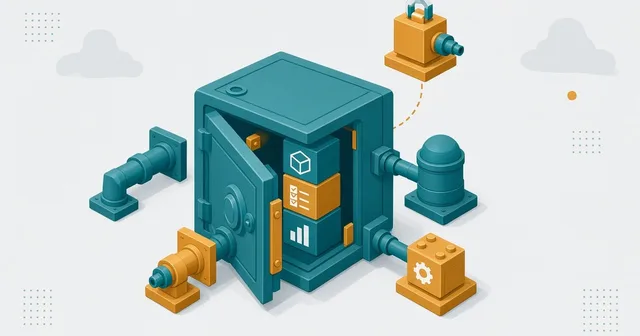
Data contracts make producers responsible for the schema, meaning, and freshness of what they emit, instead of leaving downstream teams to discover breakage in a dashboard. A contract is a versioned agreement: fields, types, keys, ownership, and what happens when the producer needs to change.
Why producers currently get a free pass
Most pipelines still treat the warehouse as a dumping ground. An application team ships a column rename on Friday, the analytics job fails on Monday, and the dashboard goes blank on Tuesday. The producer never saw an alert because their service tests still passed.
That pattern scales with every new SaaS extractor and every new microservice. Consumers multiply faster than producers, so the cost of a silent change lands on people who cannot prevent it.
Fivetran and dbt merged late 2025, which is one more sign that extraction and transformation are no longer separate hobbies. Contracts sit in the gap those tools cannot fill alone: the social agreement about what a field means and who may change it.
What a data contract actually contains
Keep the document short enough that a producer will read it. Long catalogues become wallpaper.
A practical contract names the dataset, the producing system, and a human owner. It lists primary keys and business keys. It lists fields with types, nullability, and a one-line meaning.
It also states freshness: how often the producer commits to emit, and how late a record may arrive before it is an incident. It states compatibility: which changes are additive, which are breaking, and how much notice a breaking change needs.
It does not try to be the data dictionary for the whole company. One dataset, one owner, one page.
Who owes what
The producer owns the emit. They version the schema, keep the keys stable, and announce breaking changes. They run a check in their release pipeline that the payload still matches the contract.
The consumer owns their own transformations. They may not silently widen types or remap keys "just this once." If they need a different grain, they ask for a new dataset or a new version.
The platform team owns the enforcement path: schema tests on ingest, alerts to the producer, and a way to reject or quarantine breaking payloads. Without enforcement, a contract is a wiki page.
A first contract you can ship this week
Do not start with a company-wide programme. Start with the dataset that pages people.
Write the contract next to the producing code, not in a separate portal that nobody opens. YAML or JSON in the same repository as the service is enough. A pull request that changes the payload must change the contract in the same diff.
Add three tests on ingest: required fields present, types match, primary key unique for the batch. Fail the pipeline on those three. Everything else can wait.
Tell the producer what "fail" means. A blocked deploy is clearer than a Slack message after the executive dashboard is already wrong.
Field notes on unifying data, governance and getting analytics teams to one source of truth.
Every Monday, five minutes.
Compatibility rules that prevent surprise
Additive changes are cheap: a new optional field, a new event type that old consumers can ignore. Breaking changes are expensive: rename, type change, key change, or making a field required that used to be empty.
Version the dataset when you break it. Keep the old version emitting until the last blessed consumer has moved. Do not "fix in place" and hope the warehouse rebuilds cleanly.
If you use a medallion layout, put the contract on the landing or bronze interface the producer controls. Microsoft Fabric's medallion best-practices series on 3 September 2026 was blunt: bronze must not clean, silver must not serve dashboards, and gold must not compensate for upstream quality. A contract is how you stop gold from becoming the apology layer.
How this changes producer behaviour
Responsibility is not a lecture. It is a failing test in their pipeline and their name on the contract.
When the owner is a service team, they start asking whether a field is actually used before they drop it. When the owner is "data," they will keep shipping surprises because the page does not land on them.
Publish a short scoreboard: contract coverage on the datasets that feed executive metrics, and time-to-notice when a contract fails. That is enough governance for a small team.
LensAIght, as a unified data intelligence platform, is most useful here when ingest, modelled tables, and the dashboards that read them share the same dataset identity. The contract still lives with the producer. The platform should make violations visible before a person has to eyeball three charts.
Common failure modes
Contracts written only by analytics never get implemented. Contracts written only by producers omit the business meaning consumers need. Contracts that try to cover every column in a legacy dump never ship.
Skip all three. Cover the keys and the fields that feed the metrics people fight about. Expand later.
Frequently asked questions
What is a data contract in practice?
It is a versioned agreement on schema, keys, meaning, freshness, and change rules for one dataset. The producer owns it. Ingest tests enforce it.
Do we need a special tool to start?
No. A YAML file in the producing repo, three ingest tests, and an owner name will beat an empty catalogue. Tools help later, when you have many producers.
Who should write the first draft?
The producer writes schema and keys. The consumer writes meaning and freshness needs. They merge one page. Analytics should not invent a contract the producer has never seen.
What if a producer refuses to sign?
Then that dataset is not ready to feed an executive metric. Keep it in an experimental zone until someone will own the emit.
How do contracts relate to dbt tests?
dbt tests catch consumer-side assumptions. Contracts catch producer-side changes before those assumptions break. You want both. After Fivetran and dbt merged late 2025, teams still need this split of responsibility.
When is a change breaking?
If a consumer following the current contract would misread or drop rows, it is breaking. Renames, key changes, and tighter nullability are the usual examples.
Book a demo to see a managed data platform running on your own sources
LensAIght